Homeowner Insurance Client Handout
This handout explains how most homeowner insurance policies handle tree removal when a tree falls during a storm. Coverage can vary slightly between policies, but most standard policies follow similar guidelines.
When a Tree Falls on Your House
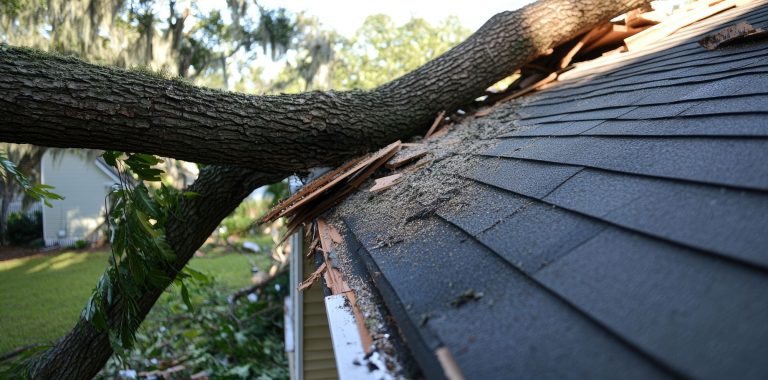
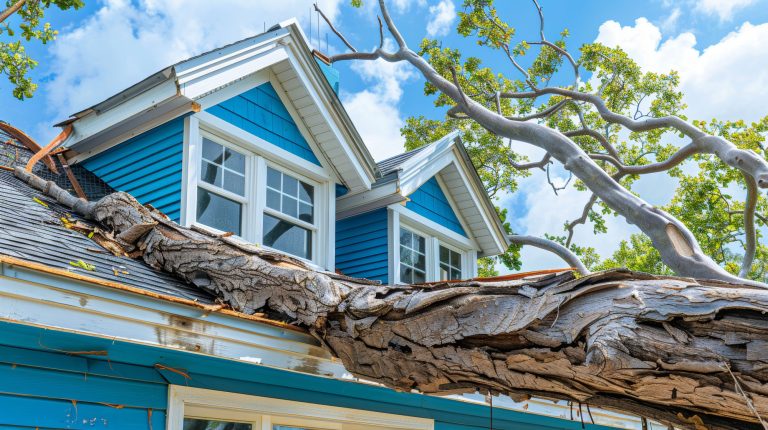
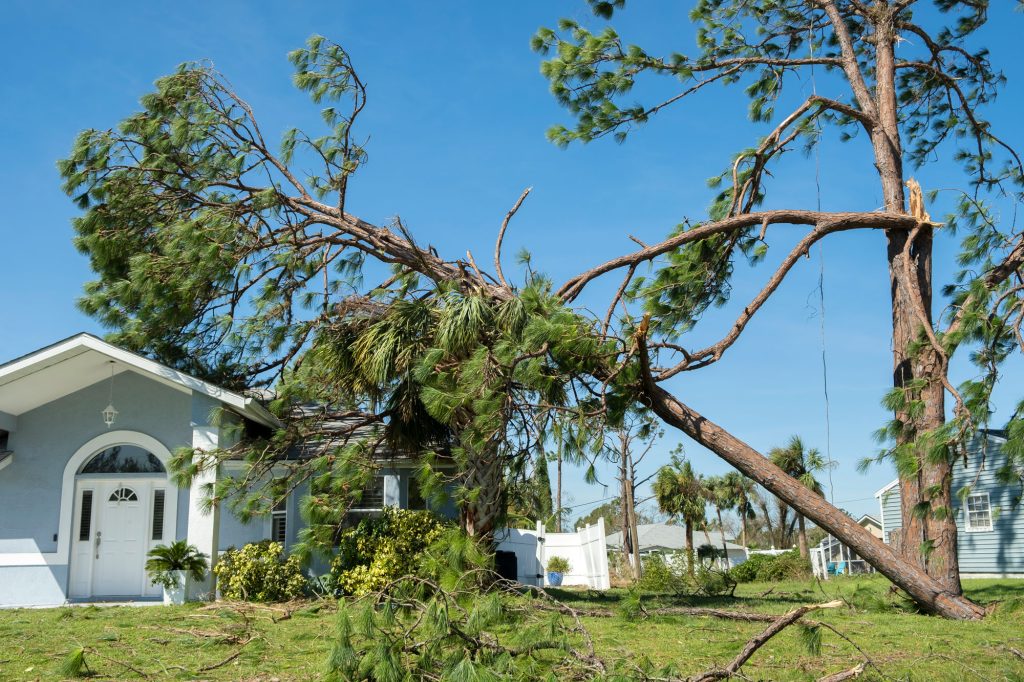
If a tree falls and damages your home, garage, or another insured structure, insurance typically pays for the reasonable cost to remove the tree from the structure so repairs can be made.
This usually includes:
- Cutting the tree into sections
- Lifting or removing the tree from the roof or structure
- Moving portions of the tree necessary to repair the damage
- Emergency tarping or protection to prevent further damage
Important: Removing the tree from the structure is usually considered part of the building repair cost, not debris removal. This means it may be paid under the dwelling coverage rather than the debris removal limit.
Debris Removal Once the Tree Is on the Ground
After the tree is removed from the structure and is lying on the ground, insurance policies typically apply debris removal limits.
Most policies provide limits such as:
- $500 per tree
- $1,000 per loss
These limits normally apply to hauling away the tree debris after it has been removed from the structure.
Situations Where Tree Removal May Be Covered
- When a tree falls on a house or insured structure
- When a tree blocks a driveway or handicap ramp
- When a covered storm such as wind, hail, or ice causes the tree to fall
Situations Where Tree Removal May Not Be Covered
- When a tree falls in the yard but does not damage anything
- Removal done for landscaping purposes
- Damage caused by flooding or earth movement
Example Claim Scenario
Example: A windstorm knocks a large tree onto a roof.
- Insurance pays to cut and remove the tree from the roof so repairs can begin.
- Roof repairs are covered under the dwelling portion of the policy.
- Once the tree is on the ground, debris removal coverage may apply to haul it away.
Example cost breakdown:
- $3,500 to remove tree from roof (part of building repair)
- $500 debris removal limit to haul away the tree
Typical Insurance Policy Language
Many homeowner policies use language similar to the following (often found in ISO HO-3 policies):
“We will pay your reasonable expense for the removal of tree debris from the residence premises if the tree damages a covered structure or blocks a driveway or ramp designed to assist a handicapped person. The limit for debris removal is typically $500 per tree, with a maximum of $1,000 per occurrence.”
Policies also commonly state that debris removal is included within the property coverage limit unless additional debris removal coverage is specifically provided.
What Homeowners Should Do After a Tree Falls
- Take photos of the tree and all damage before removal
- Notify your insurance company as soon as possible
- Keep all invoices and estimates from contractors
- Do not discard damaged materials until the loss is documented
This document is intended as a general educational guide. Coverage and limits depend on the specific insurance policy and endorsements.
Prepared for homeowner education regarding storm-related tree damage claims.